
You may see a fee attached to the course you’re interested in, but if you are 19+ there may be funding options available to cover the cost of your course.
Get in touch with admissions@ccsw.ac.uk if you’d like anymore information.


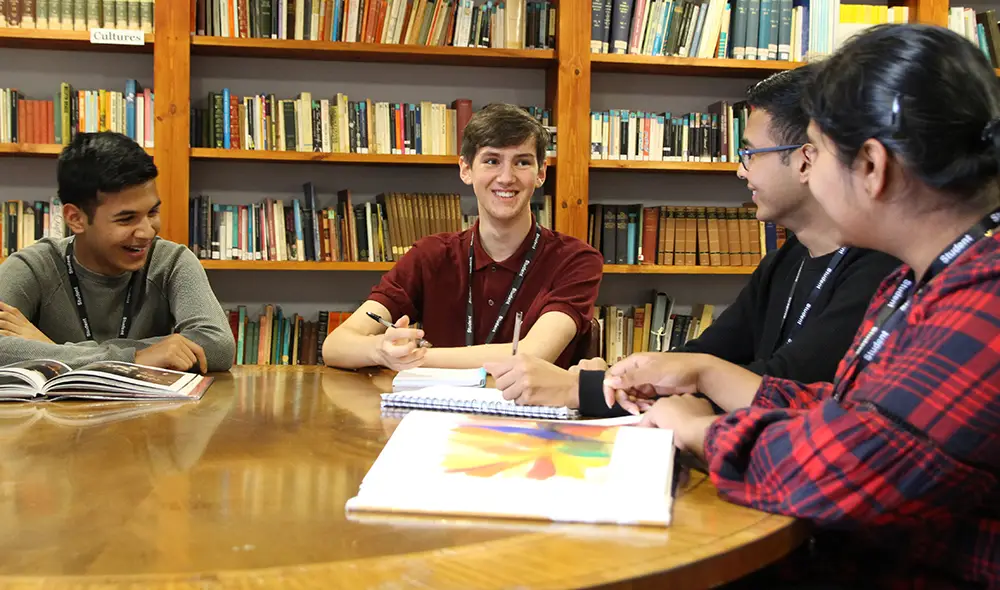
In A-level English Language, you will develop your analytical and critical skills by exploring the linguistic strategies used in a wide range of texts, including adverts, speeches, news articles, spoken conversations, and social media. You will learn how language often works in subtle ways to create meaning and shape representations; something which is frequently exploited in both marketing and politics. You will also study how the English language varies across social groups such as gender, sexuality, class, ethnicity, age, and region, and examine how people’s attitudes towards these variations can lead to strong opinions about what counts as ‘correct’ or ‘incorrect’ language.
In your second year, you will investigate how children acquire language, considering a variety of linguistic and psychological perspectives on language development, while analysing real-life transcripts and videos of children’s speech. You will also explore how the English language has changed over time, from historical influences such as invasions, inventions, and shifting social roles, to more contemporary developments including political correctness and the impact of the internet. Alongside this, you will consider the often-conflicting attitudes towards these changes. The final part of your course involves producing an independent coursework folder, which will include a linguistic investigation on a topic of your choice and a piece of original creative writing.
Course Contents/Assessment:
Paper 1: Language, the Individual and Society (40% of the A-level grade)
Paper 2: Language Diversity and Change (40% of the A-level grade)
Non-exam assessment: Language in Action (20% of the A-level grade)
Language Investigation: students choose a linguistic topic to research (e.g. accents, online communication, gendered talk) and collect data to analyse.
Original Writing and Commentary: students produce a creative or discursive piece of writing in a chosen genre, and then write a commentary reflecting on language choices in that piece.
Why you should study English Language:
English Language is an A-level which is highly valued by universities and employers. By studying English Language at A-level, you will gain vital skills for your future working life – communication, analytical and critical thinking skills. But more importantly, such skills will allow you to be a more conscious, critical person who is able to challenge taken-for-granted assumptions, and understand the role of language in social control, media manipulation and propaganda.
Our A-level English Language department consistently achieves 100% pass rate and grades above national averages.
What else you can do on the course:
We often have trips and/or workshops associated with the British Library in London to experience their Language Diversity and Change exhibitions such as their 'Sounds Familiar' workshop on British accents and dialects. We also have links to various universities and often have guest speakers providing degree-level taster sessions on English Language and Linguistics.
In A-level English Language, you will develop your analytical and critical skills by exploring the linguistic strategies used in a wide range of texts, including adverts, speeches, news articles, spoken conversations, and social media. You will learn how language often works in subtle ways to create meaning and shape representations; something which is frequently exploited in both marketing and politics. You will also study how the English language varies across social groups such as gender, sexuality, class, ethnicity, age, and region, and examine how people’s attitudes towards these variations can lead to strong opinions about what counts as ‘correct’ or ‘incorrect’ language.
In your second year, you will investigate how children acquire language, considering a variety of linguistic and psychological perspectives on language development, while analysing real-life transcripts and videos of children’s speech. You will also explore how the English language has changed over time, from historical influences such as invasions, inventions, and shifting social roles, to more contemporary developments including political correctness and the impact of the internet. Alongside this, you will consider the often-conflicting attitudes towards these changes. The final part of your course involves producing an independent coursework folder, which will include a linguistic investigation on a topic of your choice and a piece of original creative writing.
Course Contents/Assessment:
Paper 1: Language, the Individual and Society (40% of the A-level grade)
Paper 2: Language Diversity and Change (40% of the A-level grade)
Non-exam assessment: Language in Action (20% of the A-level grade)
Language Investigation: students choose a linguistic topic to research (e.g. accents, online communication, gendered talk) and collect data to analyse.
Original Writing and Commentary: students produce a creative or discursive piece of writing in a chosen genre, and then write a commentary reflecting on language choices in that piece.
Why you should study English Language:
English Language is an A-level which is highly valued by universities and employers. By studying English Language at A-level, you will gain vital skills for your future working life – communication, analytical and critical thinking skills. But more importantly, such skills will allow you to be a more conscious, critical person who is able to challenge taken-for-granted assumptions, and understand the role of language in social control, media manipulation and propaganda.
Our A-level English Language department consistently achieves 100% pass rate and grades above national averages.
What else you can do on the course:
We often have trips and/or workshops associated with the British Library in London to experience their Language Diversity and Change exhibitions such as their 'Sounds Familiar' workshop on British accents and dialects. We also have links to various universities and often have guest speakers providing degree-level taster sessions on English Language and Linguistics.
The course fee shown is the co-funded rate which is only available for people living in the local authority areas of Cheshire West and Chester or Cheshire East. If you live outside of these local authorities please contact the College for fee information.
You may see a fee attached to the course you’re interested in, but if you are 19+ there may be funding options available to cover the cost of your course.
Get in touch with admissions@ccsw.ac.uk if you’d like anymore information.
There is funding available for eligible students.
Do I pay this fee?
Higher Education courses such as HNCs and HNDs can be self-funded through a payment plan. However, for eligible students, a tuition fee loan can fund your course through Student Finance England and you may be eligible for a maintenance loan to support your education.
Please note, you should apply for your loan before the course starts. You only commit to the loan once you begin attending the course.
Find out more about eligibility at Student Finance. For more information, find out on our Higher Education page or get in touch with our Bursary department.
A1 Matrix Subject
Biologists examine the structure, behaviour and relationships of living organisms. Their work helps improve environmental management, medicine and scientific knowledge.
Biologists examine the structure, behaviour and relationships of living organisms. Their work helps improve environmental management, medicine and scientific knowledge.
Degrees you could enter:
A1 Matrix Subject
A Level
Have questions or need help applying? Our friendly Admissions Team is here for you — get in touch today!
Email: admissions@ccsw.ac.uk
Phone: 01270 654654 (Crewe Campus) / 01244 656555 (Ellesmere Port and Chester Campuses)
You may see a fee attached to the course you’re interested in, but if you are 19+ there may be funding options available to cover the cost of your course.
Get in touch with admissions@ccsw.ac.uk if you’d like anymore information.